
CFA Exhibition
CFA Exhibition
by Elizabeth Horkley
SEPTEMBER 5, 2026
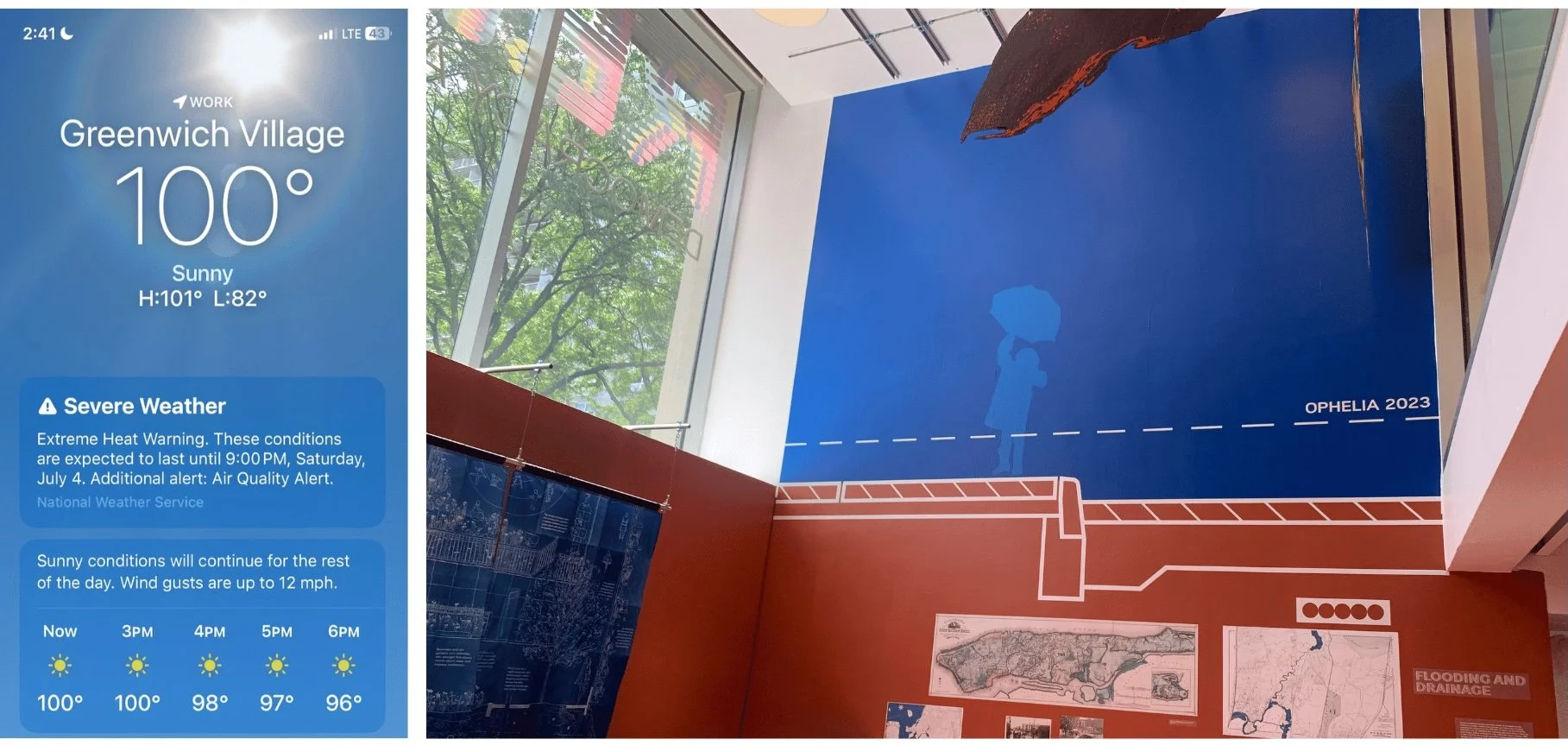
THE DOG DAYS OF SUMMER ARE UPON US, and in the current climate that might mean extreme heat, flash floods—maybe even a tornado. Most of us can remember a time before this was the norm. The current exhibition at Center for Architecture directly addresses school-aged children for whom this isn’t the case.
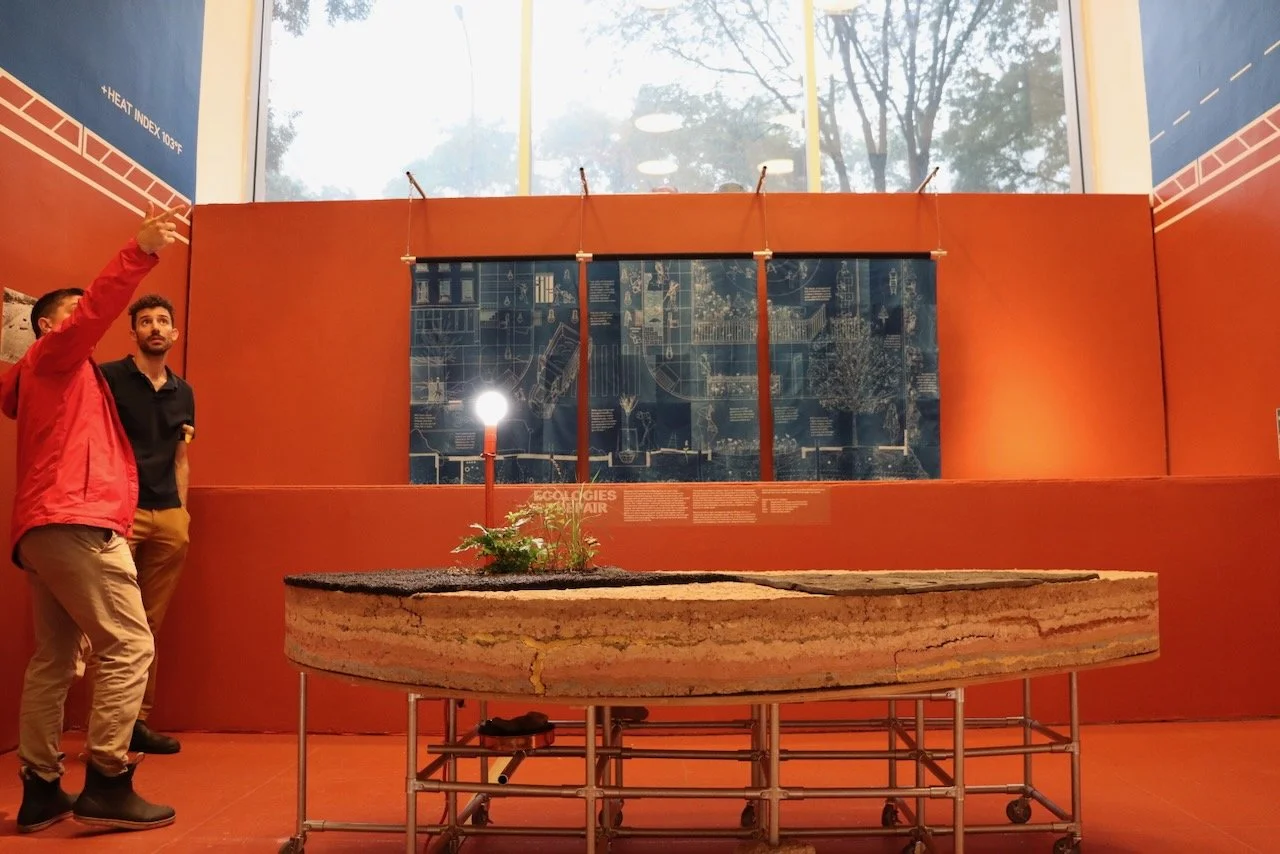
DEPAVE: An Ecological Repair of the Ground is one of two halves comprising the 2026 CFA Lab: Repair — Democracy and Urban Spaces. AIA President Mark Gardner describes the cohort in an official statement as “designers who understand that repairing our present urban fabric is inseparable from our regenerative future,”
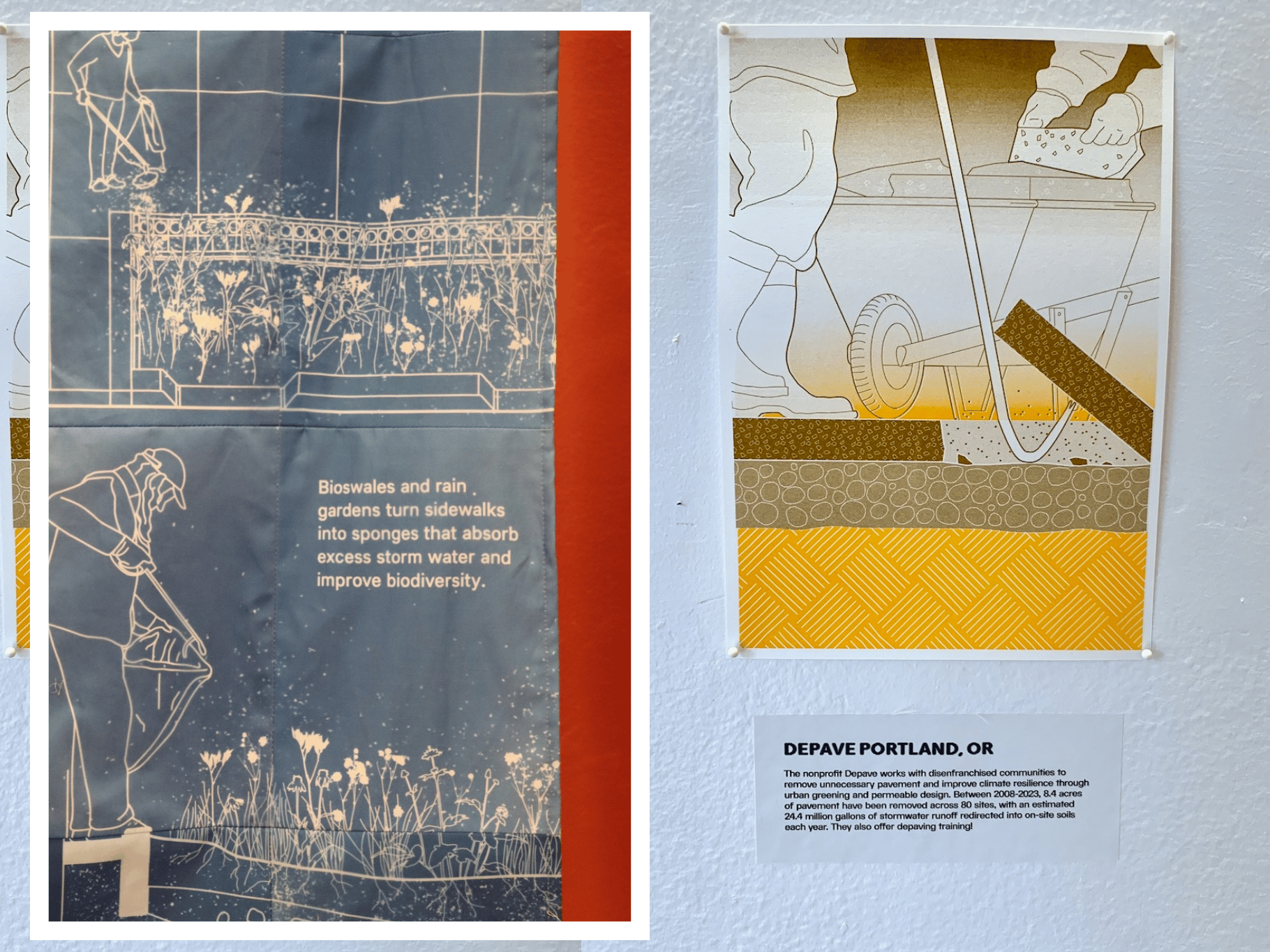
It’s no knock against Friends Making Work that concepts are explicated clearly enough for a young person to understand. The sweet visual aids and tactile, interactive eleements are just as useful to a layperson. The case for greenscaping—replete with illustrative historical documents and case studies from successful depaving actions across the U.S.—are just as useful for a layperson.
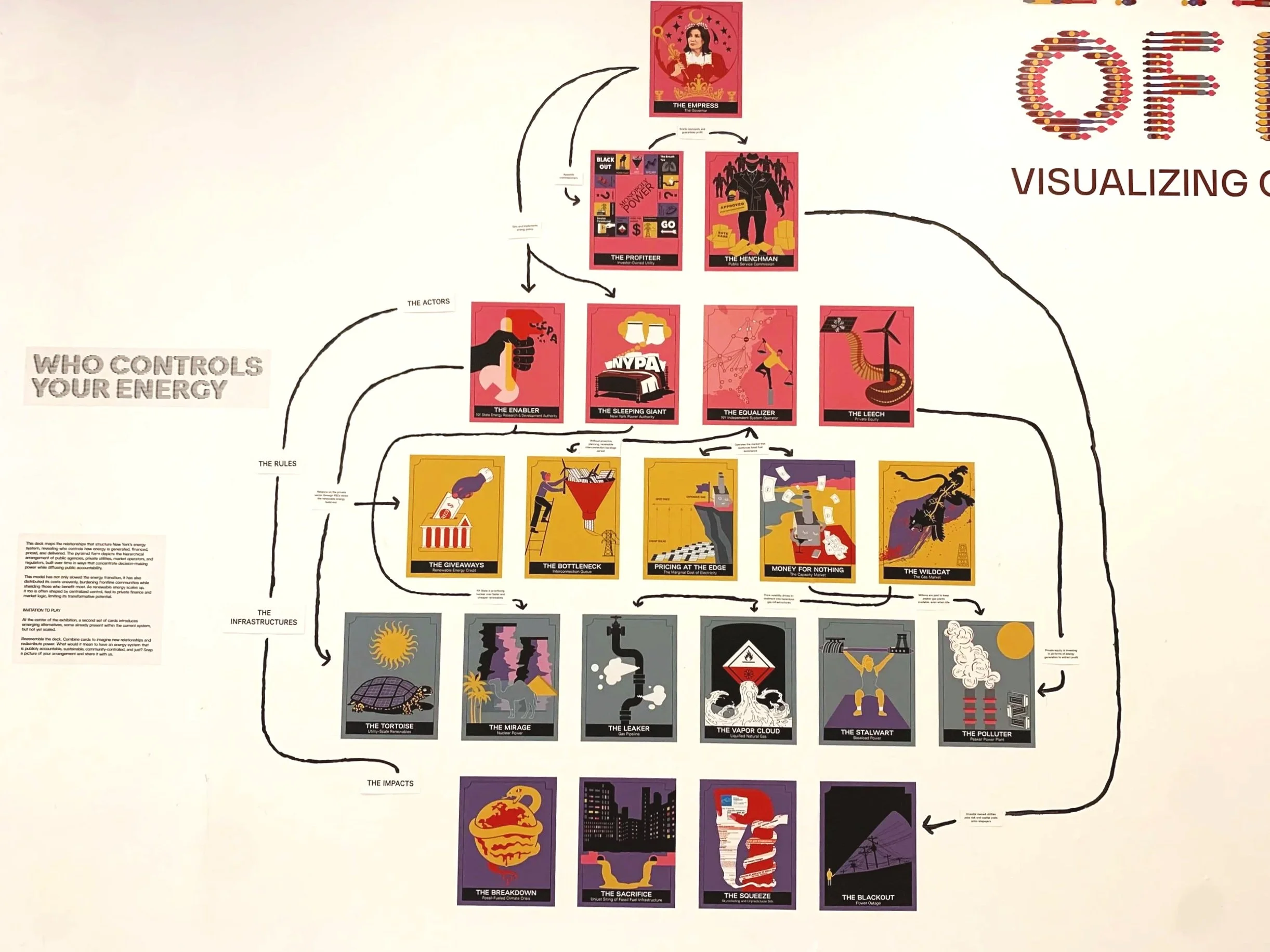
Upstairs, a pyramid diagram part of the other CFA Lab showcase by [] shows how the maintenance of your block (or lack thereof) goes all the way to the top, to Albany.
So, the question emerges: What’s everyone waiting for? Why aren’t there street trees on every block; bioswales on every street?
Village Alliance’s archives on our history of digging provide context on a more human scale.
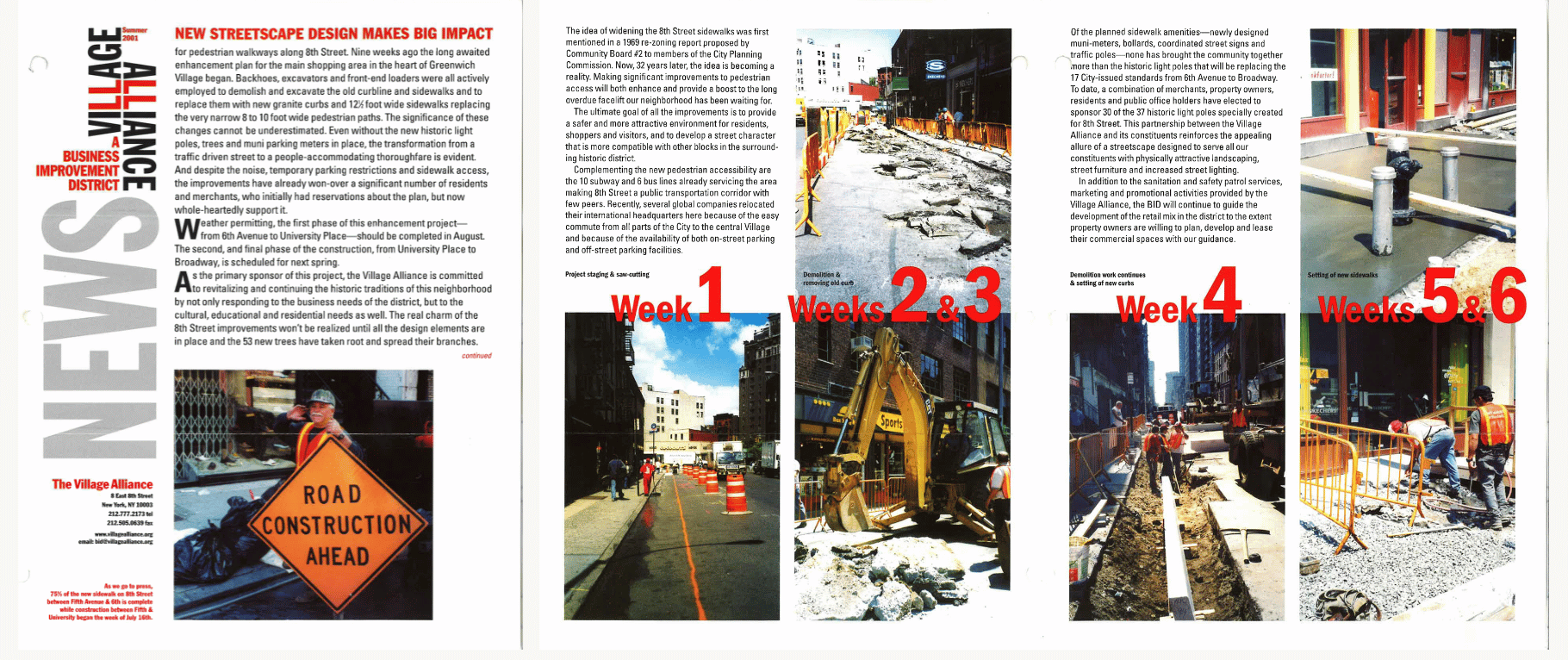
Village Alliance’s current greenscaping initiative is the first to take place in over 20 years. Under the banner of “streetscaping,” the early aughts planting effort was part of a plan to widen the sidewalks: a proposal that first came up at a Community Board meeting in 1969.
Stakeholders’ digests from the time are lilluminating. Citing project-based research by a formidable team that included nearby universities, the NYC Department of Transportation, and private consultants, the Alliance wrote:
“These studies underlined the need to increase pedestrian safety, capacity, and level of service on 8th Street. They further stressed that improvements such as new, historic light poles, street furniture, floral plantings and wayfinding signage would connect the area to the Greenwich Village Historic District of which it is part and create an identity for the street as a neighborhood shopping destination.”
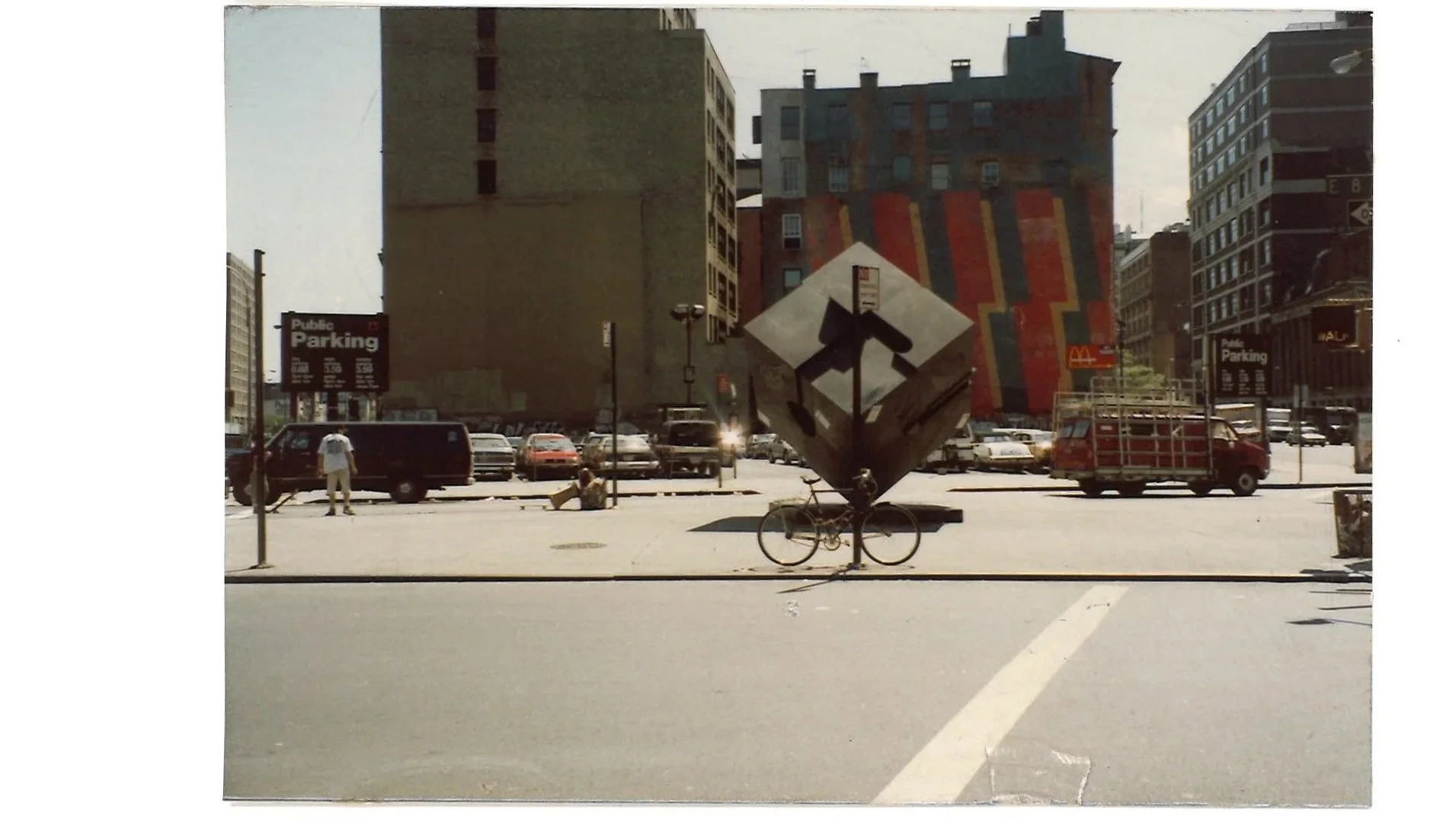
While creating a better environment for pedestrians may have seemed novel in 1969, by the late 90s tailwinds had shifted to embrace foot-traffic over car traffic (in New York City, at least). Conversely, the case for greenscaping resting on historical preservation and aesthetics comes across as quaint to readers in 2026, who’ve—in the past six years, come to know the meaning of terminology like “squall,” “heat dome,” and “AQI.”
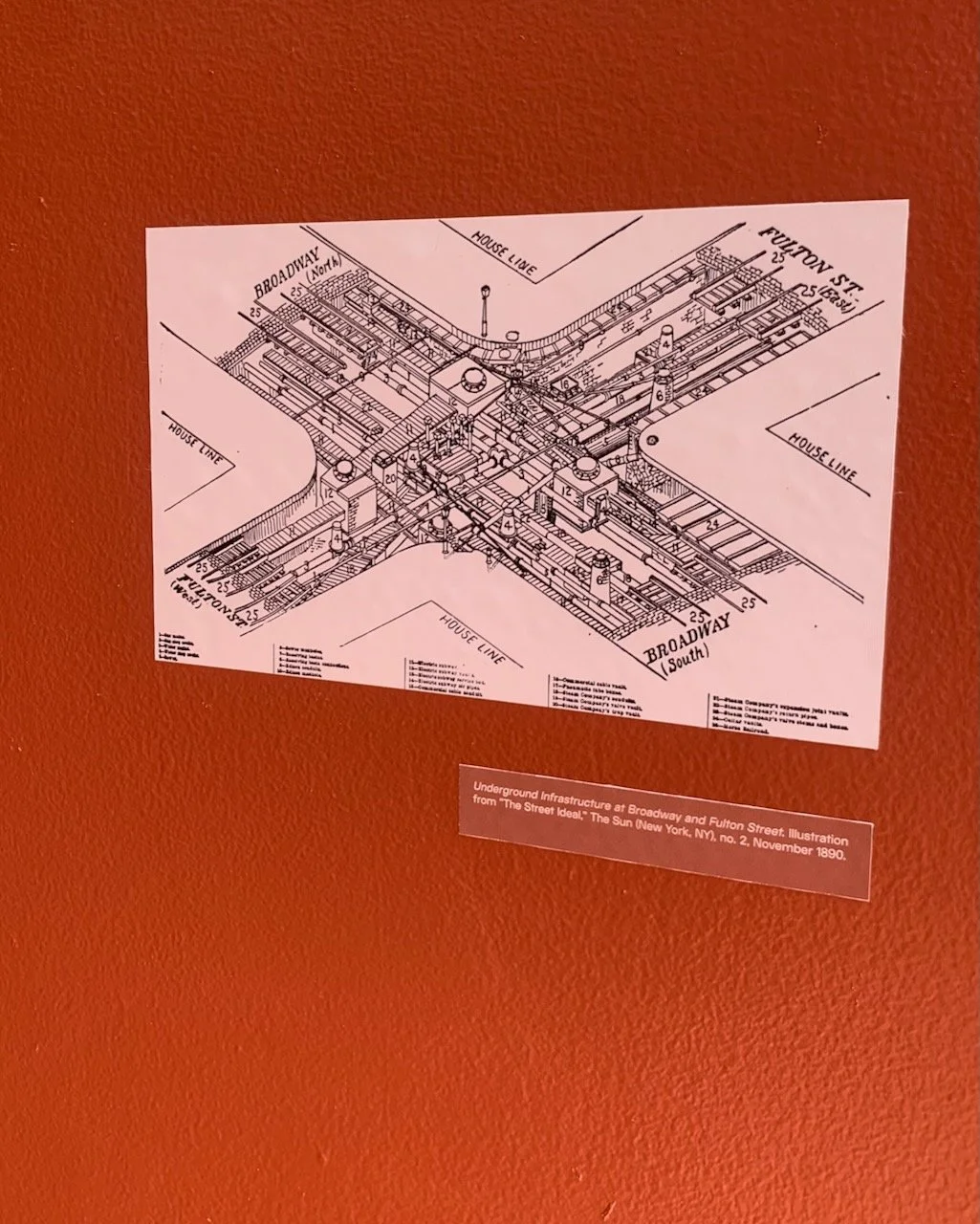
DEPAVE exhibition photo
An 1890 diagram showing the nascent subway serves to show why you’ll never see a street tree on the same block as a grate.
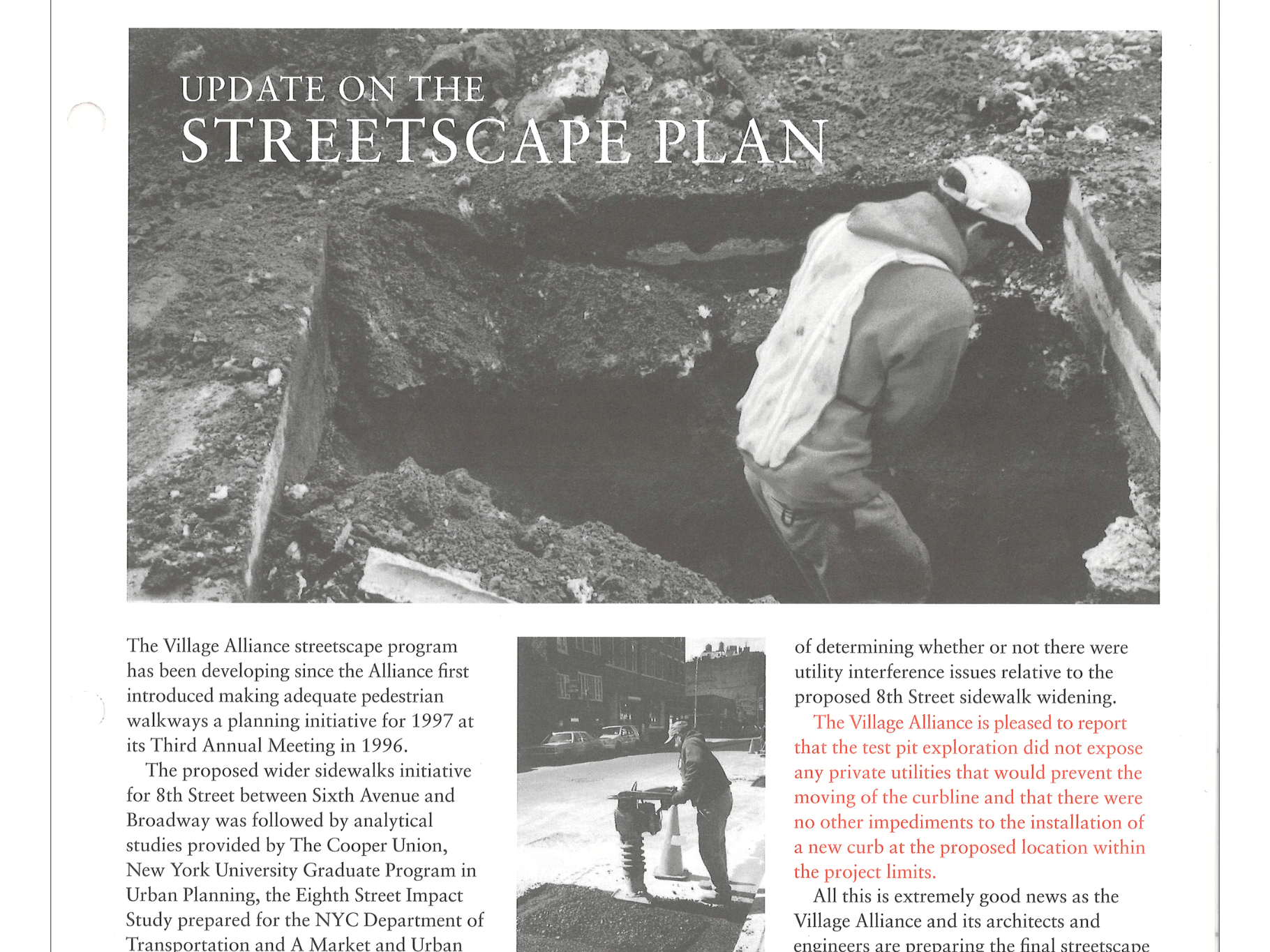
Semantics aside, periodic updates from this era show the challenges of making improvements. The same edition from 1998 shows the step after interagency studies concluded but before work began: a “subsurface utility report” necessary to secure CB2’s final approval that amounted to digging 81 test pits in 5 days “for the purpose of “determining whether or not there were utility interference issues.” That there weren’t is one reason why 8th Street boasts a verdant canopy.
A year later, our predecessors were beginning to see the light at the end of the tunnel on the decades-long process—with a caveat. “The real charm of the 8th Street improvements won’t be realized until all the design elements are in place and the 53 new trees have taken root and spread their branches,” proclaimed a mailer from 2001.
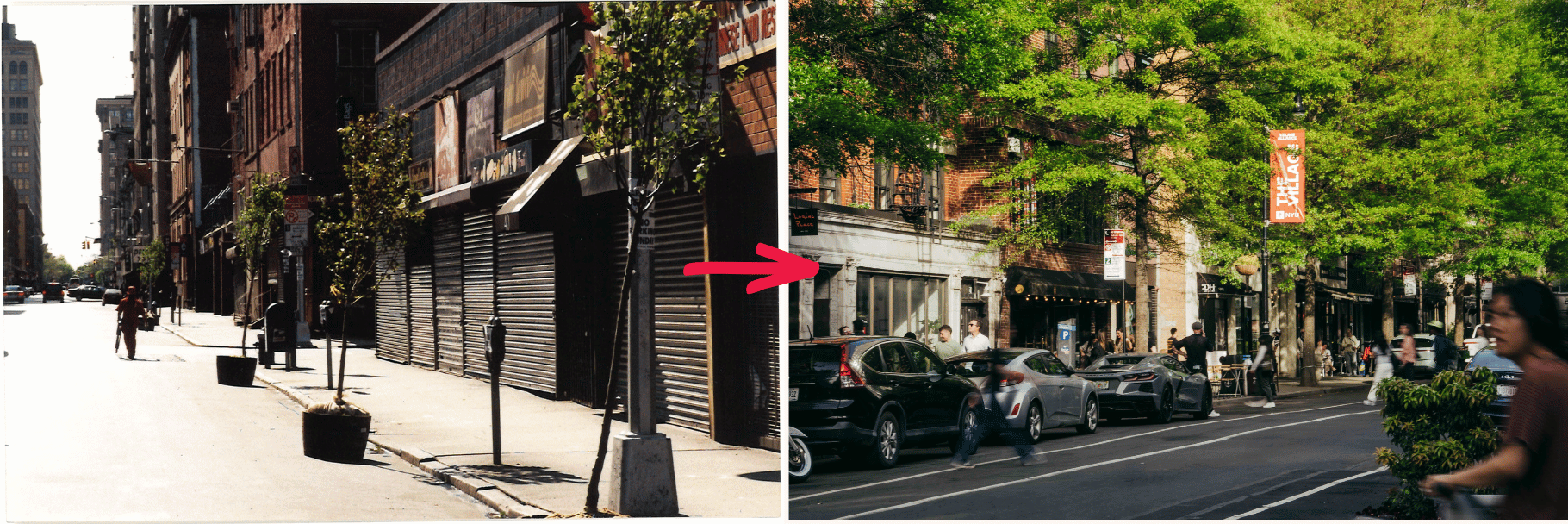
Suffice it to say that the green vision of 1969 has finally come to fruition on 8th Street. But if Village Alliance’s history of digging reveals anything, it’s that DEPAVE’s focus on childhood education is more than cute: it’s strategic—and necessary.
Christine Giorgio of the design collective Friends Making Work pulls no punches in describing the stakes: “The imperative to understand the value of the ground, of what lies beneath the thin crust of asphalt, concrete, and compacted urban soil, is a matter of life and death” she wrote via email. “Uncovering that knowledge can and should begin in the schoolyard.” In the exhibition, she notes, the cyanotype prints depict a school playground partially depaved to include a garden and running track. Above a stack of them for takeaway, a sign gives additional instruction: “Take one home and have a conversation with a neighbor!”
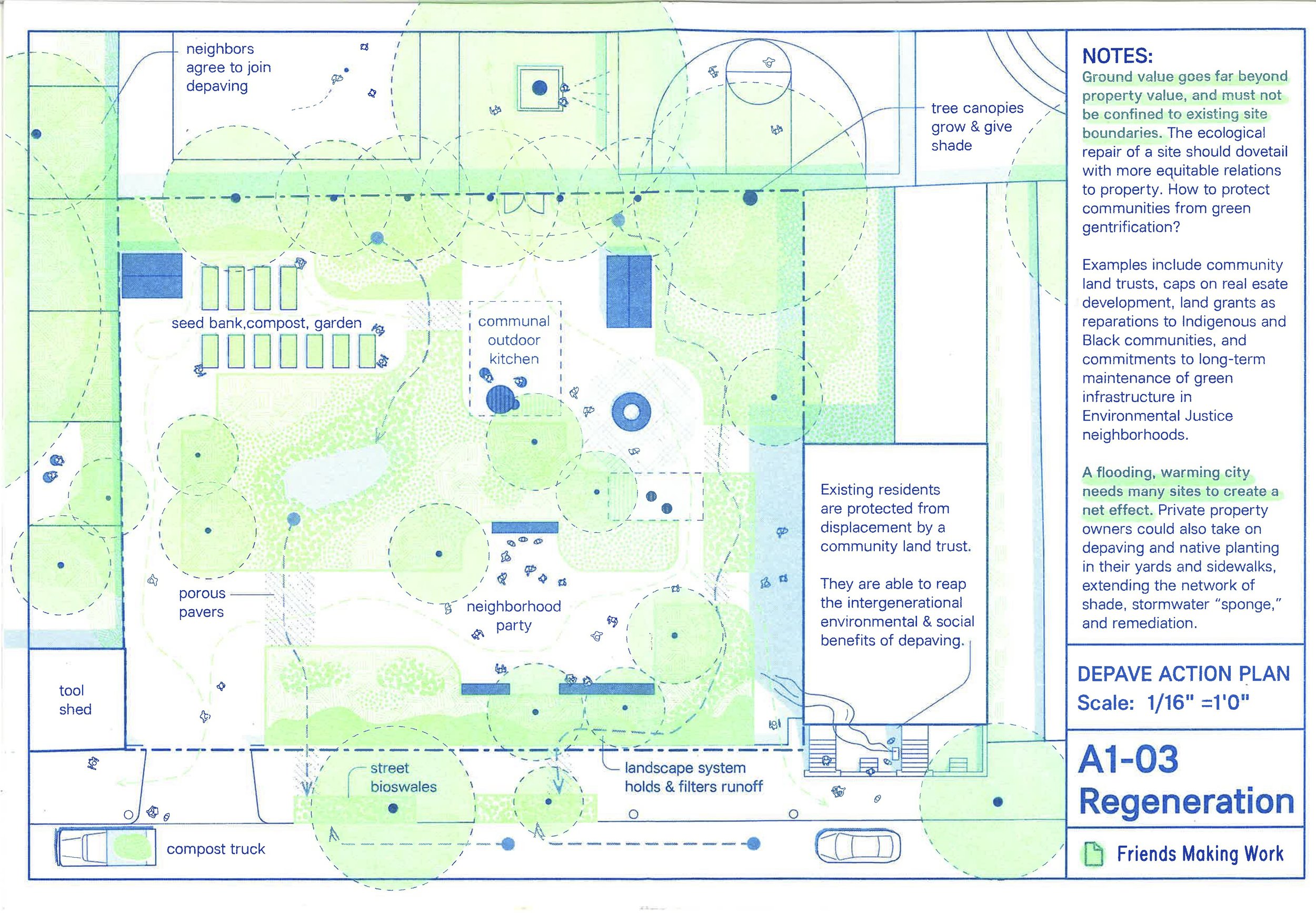
Giorgio points out that the cyanotype prints depict a school’s playground, partially depaved to include a garden and running track.
What will our grandchildren come to know? Inevitably, they will work with the misguided decisions of previous generations to make a better future for the next ones.
Jonathan Jackson, Partner, WSDIA, referenced the Japanese stitching technique of sashiko to describe the exhibition design of the CFA Lab showcase: “The repair isn’t hidden, it’s the whole point. The labor becomes the pattern.” The concept applies just as nicely to greenscaping efforts that take root in one generation and blossom in the next.
