
TK ONGOING EVENTS
A Case for Greenscaping So Clear, a Kid Could Understand
by Elizabeth Horkley
September 10, 2026
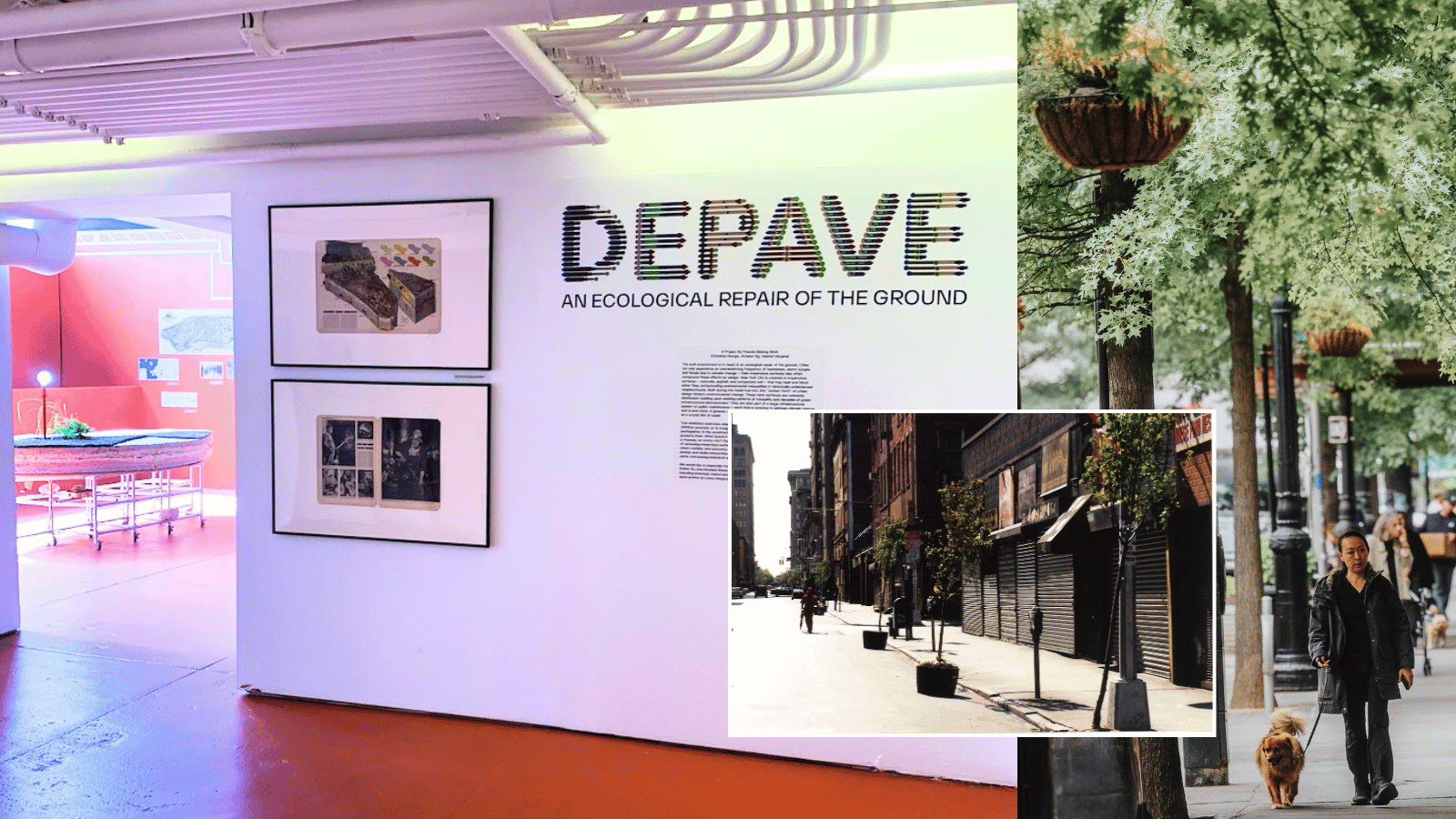
Most of us can remember a time before extreme heat, flash floods, and freak weather phenomena were the norm for summer. An exhibition at the Center for Architecture—the Greenwich Village museum and programming hub run by the American Institute of Architects—directly addressed school-aged children for whom this isn’t the case.
DEPAVE: An Ecological Repair of the Ground by design collective Friends Making Work is one of two halves comprising this year’s CFA Lab, titled Repair—Democracy and Urban Spaces. AIANY26 President Mark Gardner described the cohort as “designers who understand that repairing our present urban fabric is inseparable from our regenerative future.”
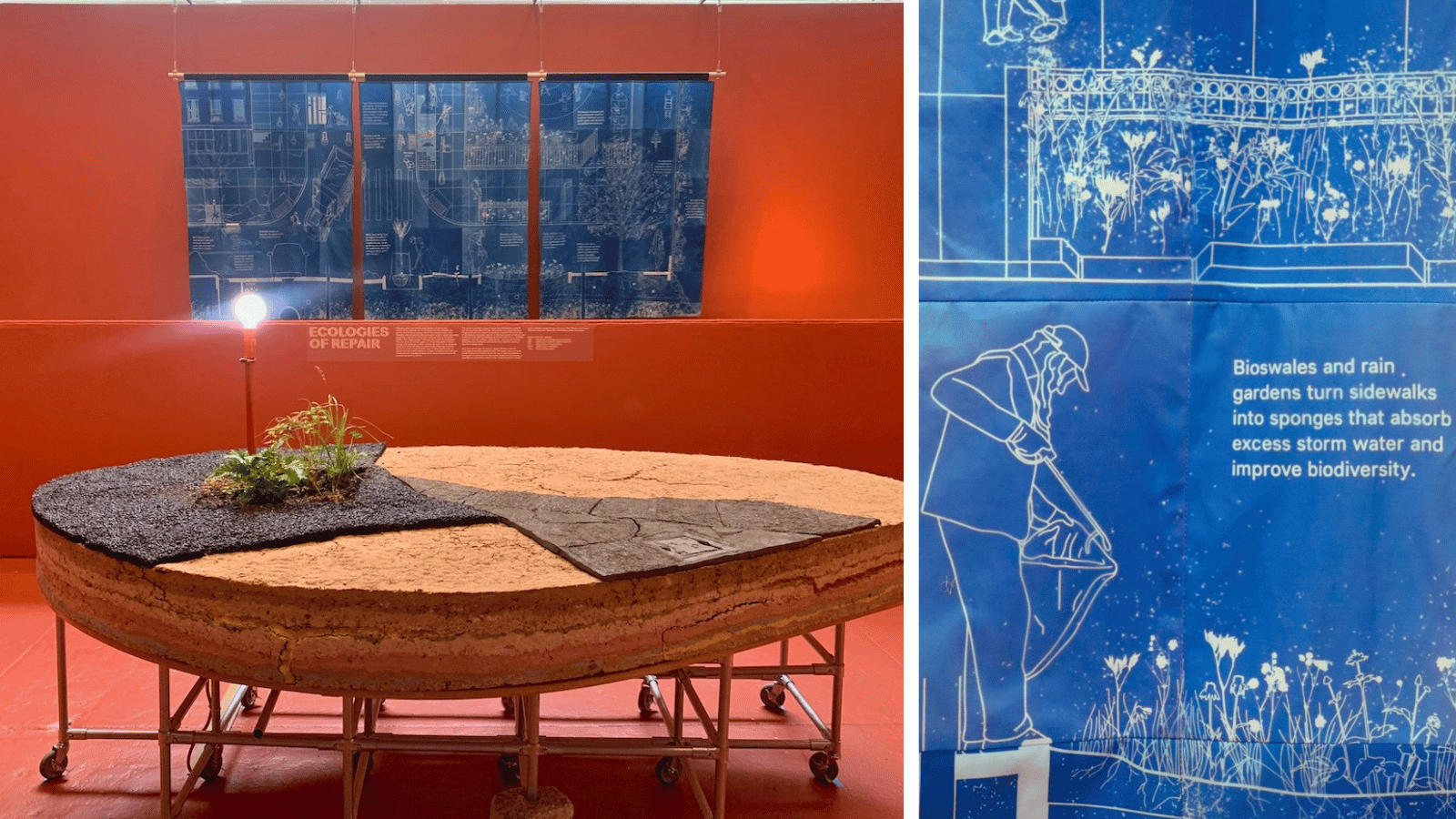
DEPAVE illustrated the complex ecosystem of an urban jungle. The centerpiece was a table built to resemble a parcel of land cut from city streets, with an intricately layered substrate, patchwork surface, and seedlings reaching toward a lightbulb sun. Above it, three cyanotype panels depicted how tried-and-true greenscaping techniques such as adding bioswales also serve to “repair the urban fabric” by bringing neighbors together in joint effort.
Over email, Friends Making Work designer Christine Giorgio pointed out that the triptych is actually of an asphalt-covered playground that’s been partially depaved to make room for a garden and running track. The decision was a deliberate one, she explained, to encourage children to imagine the ground “as a site of ecological exchange, where communications networks of roots, fungi, minerals, worms, and water drive processes essential to the earth’s metabolism.”
She struck a more somber note while reminding of the stakes: “The imperative to understand the value of the ground, of what lies beneath the thin crust of asphalt, concrete, and compacted urban soil, is a matter of life and death,” Giorgio wrote. “Uncovering that knowledge can and should begin in the schoolyard.”
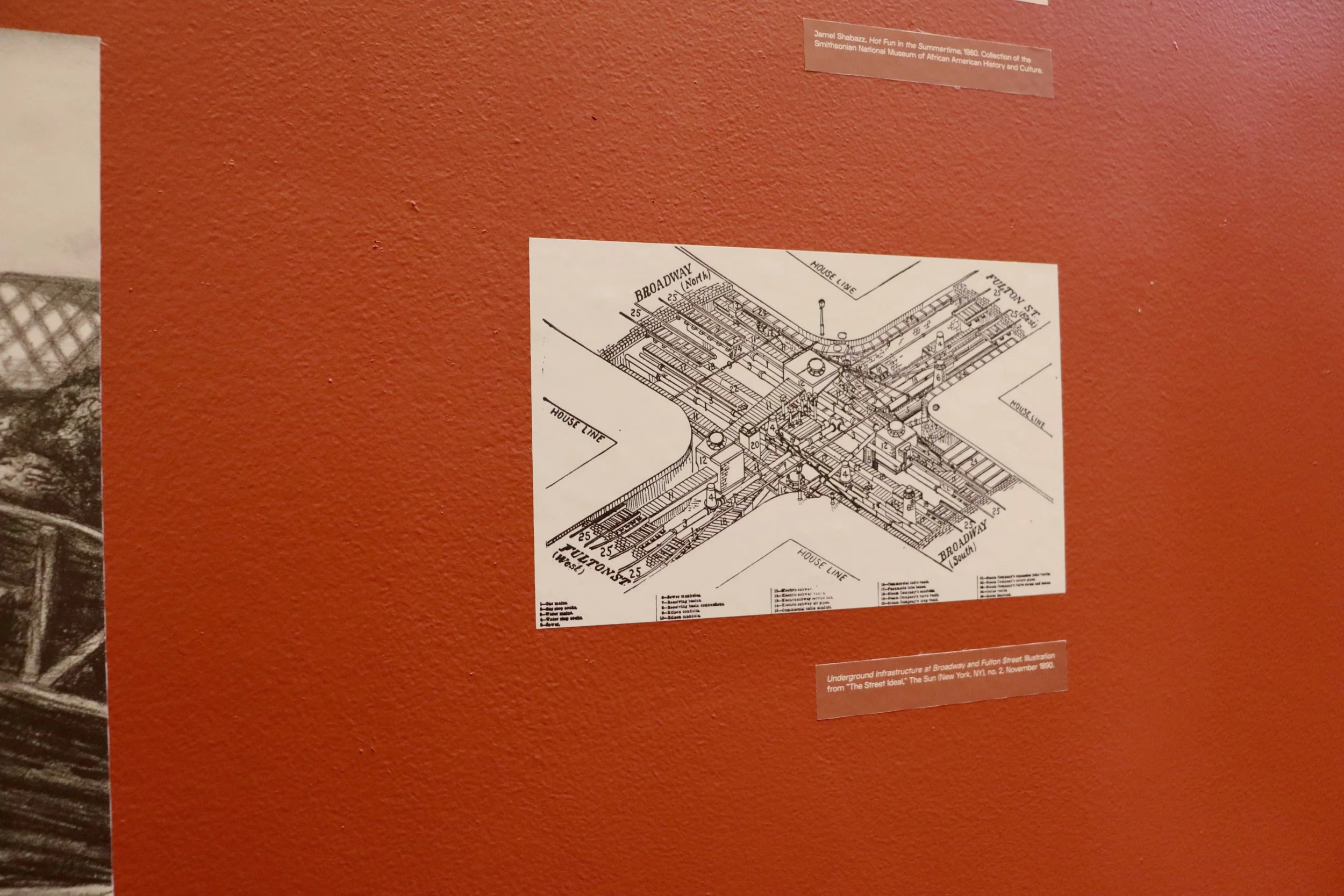
An 1890 drawing featured in DEPAVE handily showed why you’ll never see a street tree and subway grates on the same block.
“Take one home and have a conversation with a neighbor!” read a sign next to a stack of takehome drawing sets.
It’s no knock against Friends Making Work that concepts are explicated clearly enoughfor a young person to understand, with hand drawings, tactile installations, and even homework. But the case for depaving—replete with historic maps and diagrams and case studies from recent, successful actions across the U.S.—is just as enlightening to a layperson.
So, the question emerges: What’s everyone waiting for? Why aren’t there street trees on every block? Village Alliance’s archives provide context on a human scale.
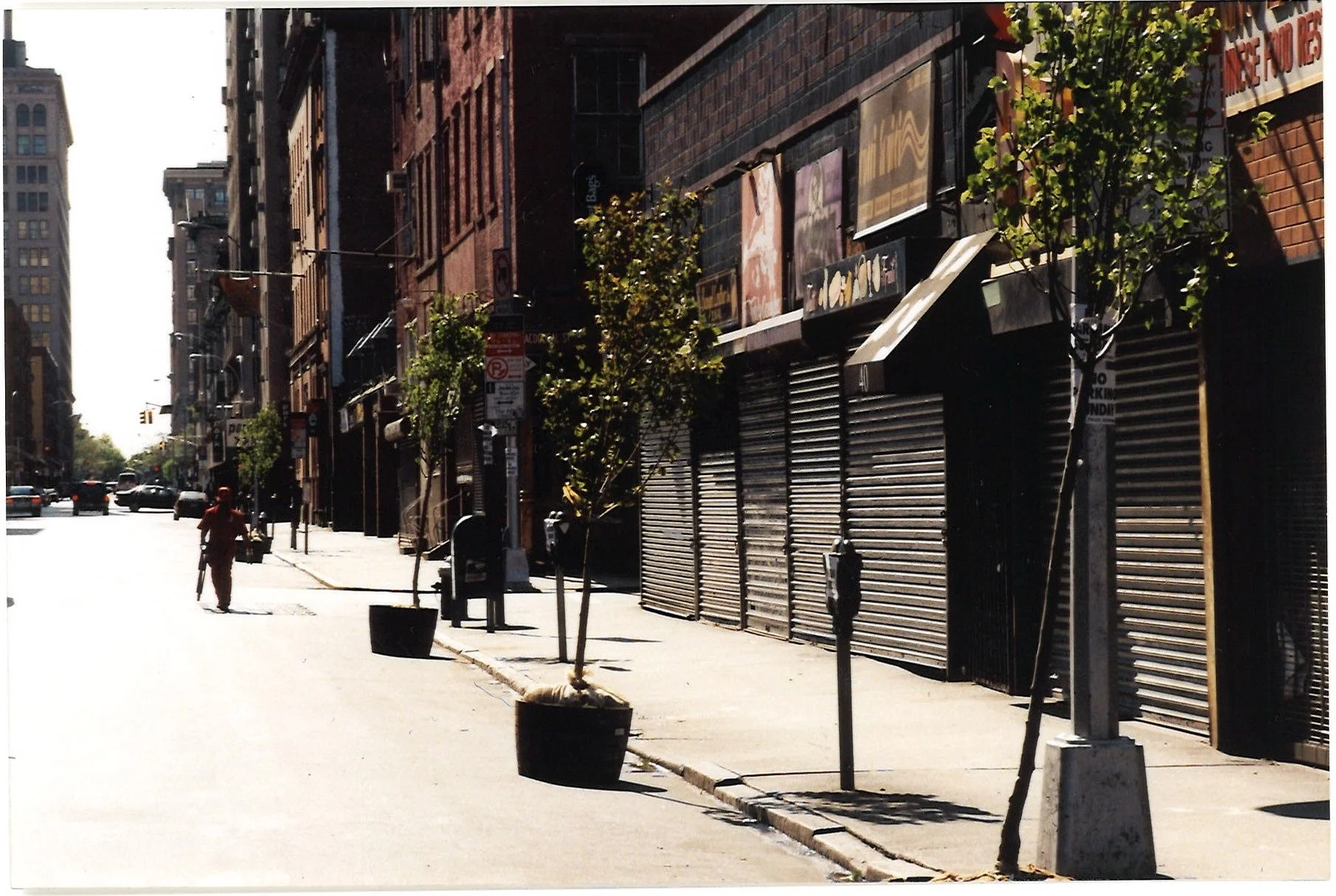
8th St. Circa 1989.
The CFA exhibition coincided with Village Alliance’s first major greenscaping initiative. Prior to its launch in 2025, the last significant planting effort took place in the late 1990s as part of a comprehensive streetscape project anchored by a proposal to widen sidewalks: a pedestrian-friendly improvement that was first raised in Community Board meetings in 1969.
That’s right: 1969. Even in the beatnik Village, accommodations for foot-traffic weren’t a slam-dunk among constituents. It took another 30 years for that plan to break ground, and a 2001 stakeholder document shows how “streetscaping” had grown to encompass more than cars and concrete:
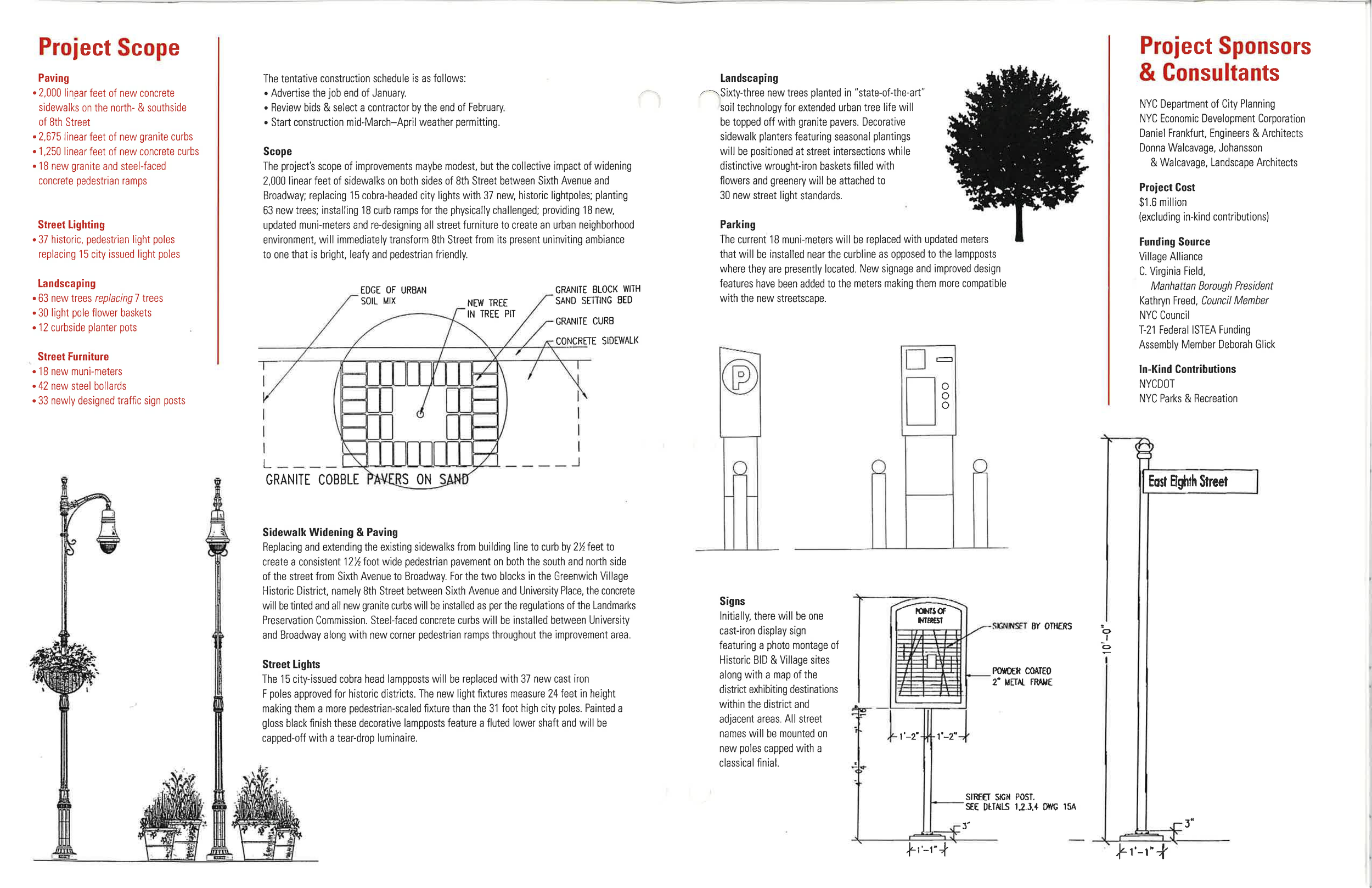
“The collective impact of widening 2,000 linear feet of sidewalks on both sides of 8th Street between Sixth Avenue and Broadway; replacing 15 cobra-headed city lights with 37 new, historic lightpoles; planting 63 new trees; installing 18 curb ramps for the physically challenged; providing 18 new, updated muni-meters and re-designing all street furniture to create an urban neighborhood environment, will immediately transform 8th Street from its present uninviting ambiance to one that is bright, leafy and pedestrian friendly.”
It’s a far cry from depaving, but the shift toward a people-centered approach preceded the type of grassroots actions portrayed in DEPAVE as well as its CFA Lab co-exhibition, Energies of Repair: Visualizing Community Power in NYC.
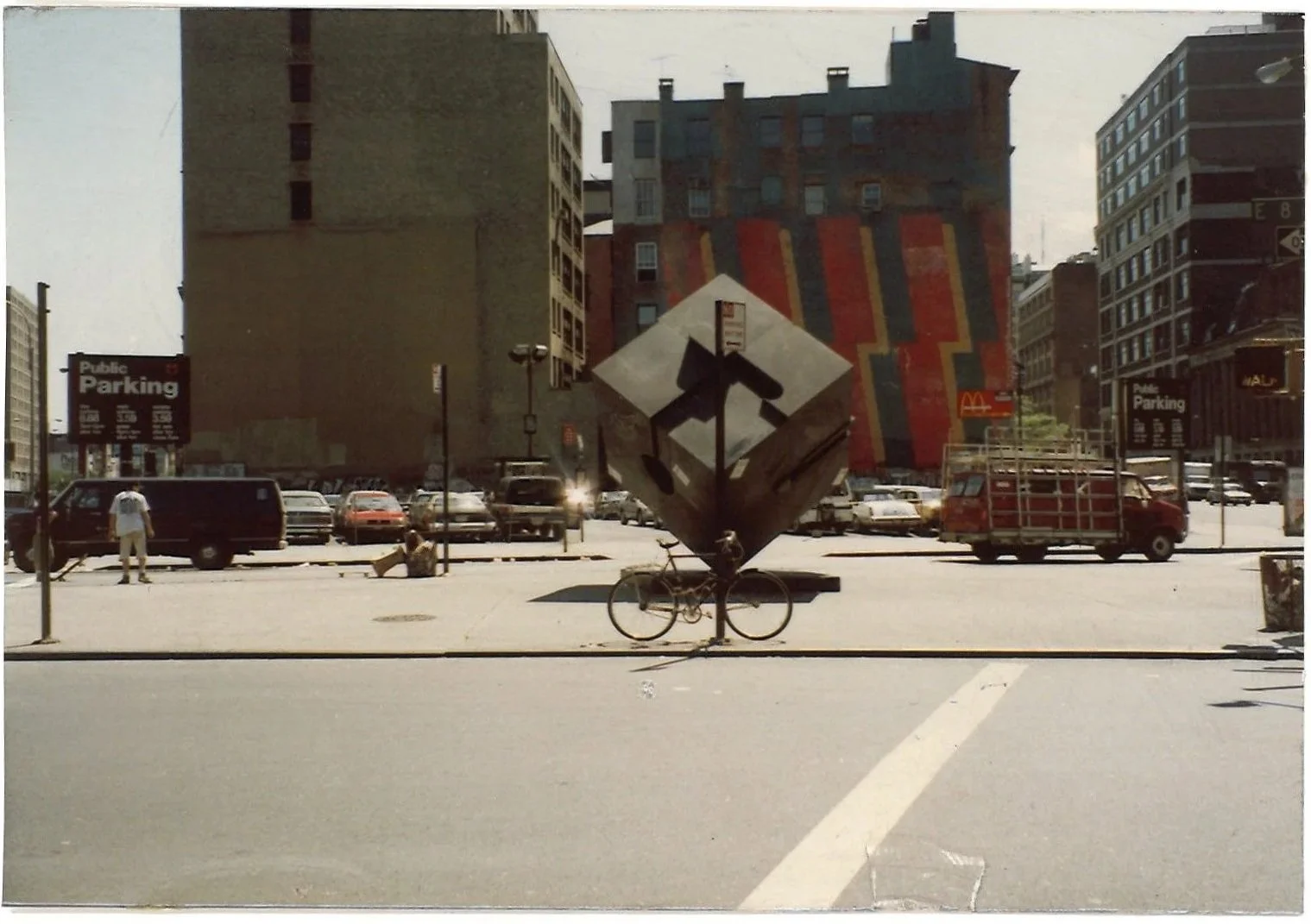
Prioritizing the pedestrian experience might have seemed ludicrous pre-1970, but by the ‘90s, New Yorkers had learned the importance of maintaining public spaces the hard way. BIDs including the Village Alliance began cropping up for this very reason, and decisions made by founders 30 years ago continue to pay leafy dividends.
Construction for sidewalk expansion had the added value of clearing the area for future planting. A 1998 Village Alliance mailer gives more context: citing the recommendation of a formidable project team that included nearby universities, the NYC Department of Transportation, and private consultants, the Alliance conducted a “subsurface utility report.” 81 test pits were dug in just five days in order to clinch CB2 approval.

(Spoiler alert: there were no “utility interference issues,” and 8th Street’s canopy is picture-perfect by the late summer light of 2026).
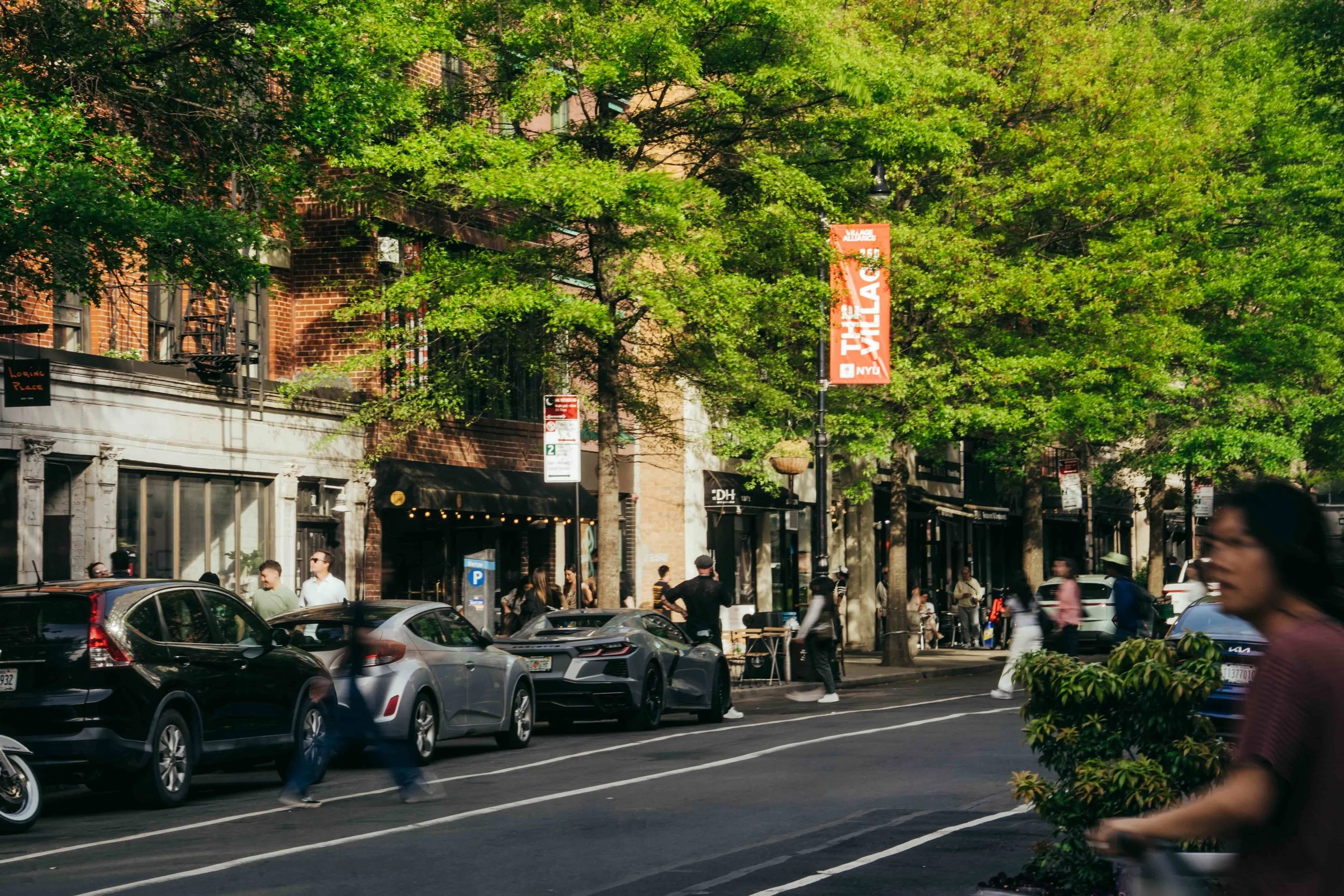
If Village Alliance’s history of paving, depaving, and planting reveals anything, it’s that cultivation like what’s demonstrated in DEPAVE can take decades to bear fruit. The kid-friendly accoutrements are more than cute: they’re pragmatic.
CFA Lab co-exhibition co-designer Jonathan Jackson referenced the Japanese stitching technique of sashiko to describe the separate-but-connected exhibitions. “The repair isn’t hidden, it’s the whole point. The labor becomes the pattern.”
The same can be said for green investments that take root in one generation and blossom in the next.
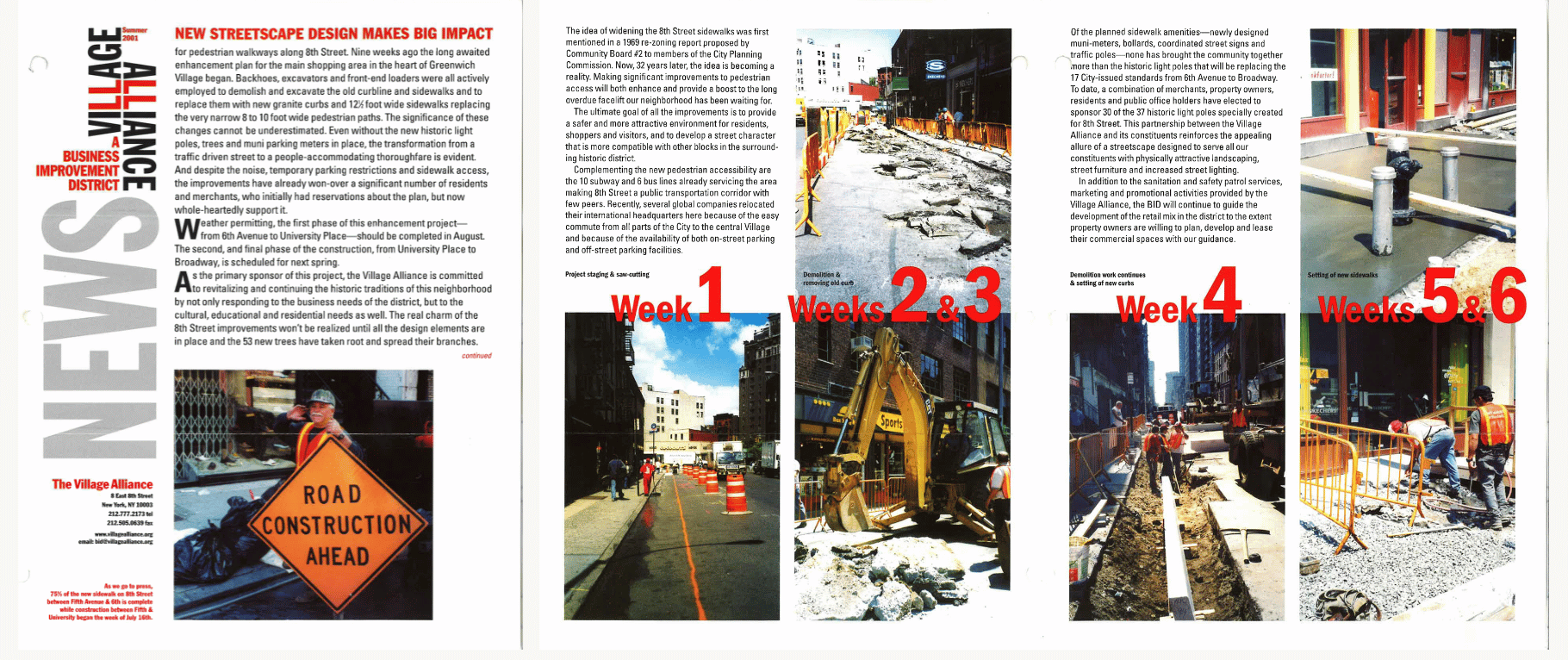
“The real charm of the 8th Street improvements won’t be realized until all the design elements are in place and the 53 new trees have taken root and spread their branches,” a digest from 2001 reads.
